Buying Estate Land Versus Standalone Land: What Should You Consider? Category: Property insights
Should you buy land within an estate or outside one? Compare costs, infrastructure, building restrictions and management responsibilities before choosing a property that suits your plans.
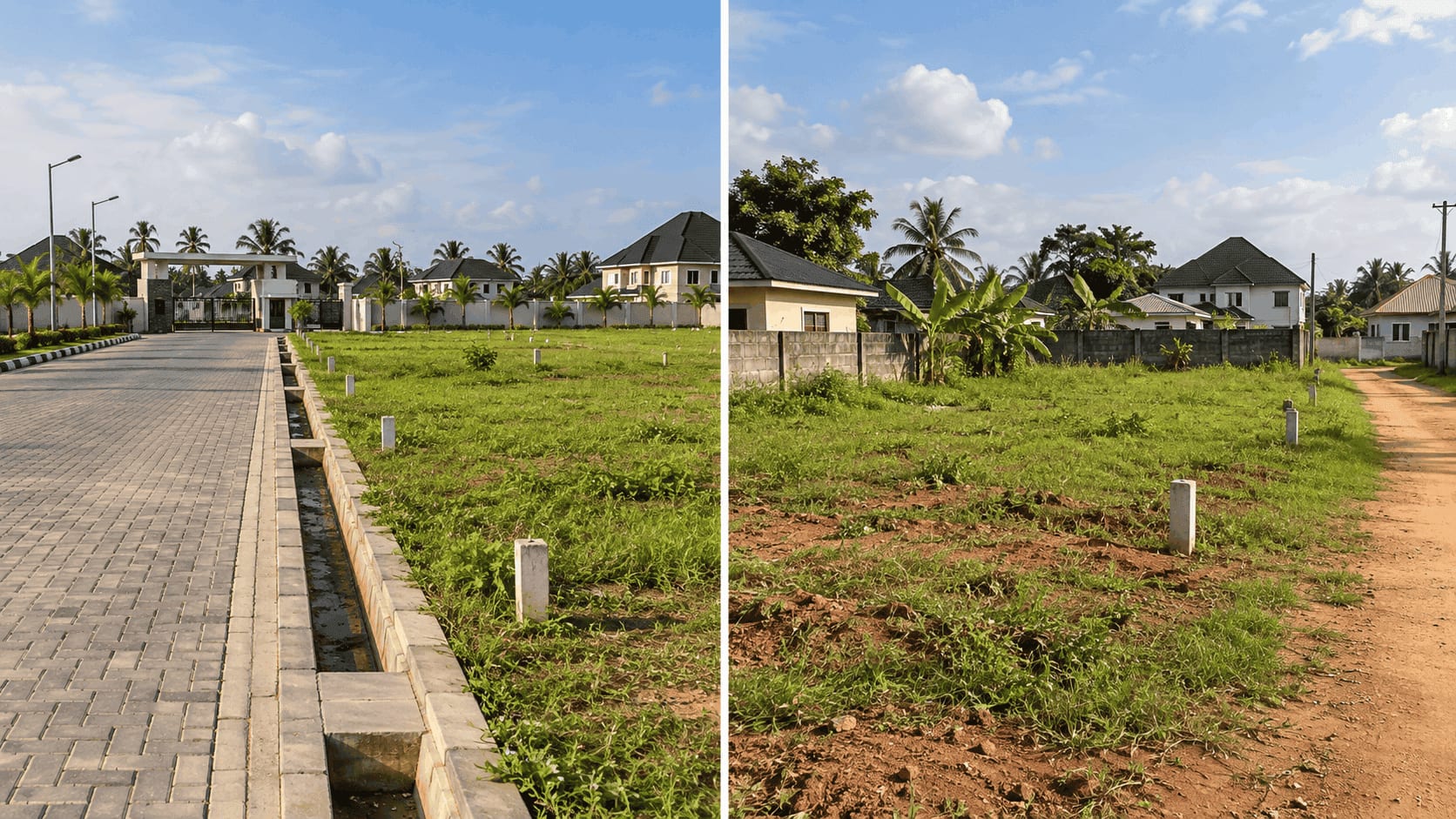
Buying Estate Land Versus Standalone Land: What Should You Consider?
When searching for land in Port Harcourt, you may come across two options: plots within an estate and standalone plots outside an organised estate development.
Both can suit different buyers. Your decision should depend on your budget, what you intend to build and how much responsibility you are willing to take on.
Before choosing, look beyond the advertised price. Consider what is already available, what is only promised and what you will need to provide yourself.
What Is Estate Land?
Estate land is a plot within a planned development, usually marketed or managed by a developer, company or association.
Depending on the development, there may be a layout, shared roads, drainage, security arrangements and building guidelines.
However, the word “estate” does not tell you whether these facilities are complete. Some estates are already developed, while others are selling plots with infrastructure planned for the future.
Always inspect the site and ask which facilities currently exist.
What Is Standalone Land?
For this comparison, standalone land means a plot outside an organised estate development. It may be sold by an individual, family, community or company.
The plot may sit within an established neighbourhood or an area that is still developing. Shared services, access roads and local arrangements will depend on that particular location.
You may have more control over some decisions, but you may also need to handle more of the preparation and coordination yourself.
1. Compare the Total Cost
An estate plot may come with charges beyond the advertised land price. Ask about survey fees, documentation, development levies, service charges and any other compulsory payments.
For standalone land, ask about the purchase price and the expenses needed to make the plot usable. Depending on its condition, these might include clearing, filling, fencing, drainage or utility connections.
A lower purchase price does not automatically mean a lower overall cost.
Request a written breakdown, then compare both options against the same goal: getting the land ready for your intended development.
2. Check Infrastructure and Access
For estate land, ask:
- Are the roads and drainage already built?
- Which utilities are available?
- Who is responsible for completing outstanding infrastructure?
- Are delivery dates and commitments recorded in the agreement?
For standalone land, check the existing road, drainage and utility situation. Find out how the plot is accessed and have that access independently verified.
For either option, distinguish between facilities you can see and facilities shown only in a brochure.
3. Understand Building Restrictions
An estate may have guidelines covering building design, setbacks, fencing, permitted uses and when construction should begin.
These rules may appeal to buyers who want a consistent neighbourhood appearance. They may also affect your plans if you intend to build rental apartments, shops or a particular house design.
Standalone land may offer greater flexibility, depending on the property. However, do not assume that land outside an estate allows unrestricted construction.
Before buying either option, have the permitted use and applicable planning requirements checked for your proposed project.
4. Ask Who Manages Shared Services
Within an estate, roads, security and other shared facilities may be managed by the developer, an estate manager or a residents’ association.
Ask who will manage them after residents move in, how charges are calculated and how maintenance decisions are made.
Outside an estate, arrangements may involve individual property owners or a neighbourhood association. Find out what already exists and what you would need to organise.
Neither option guarantees reliable management. Clear responsibilities matter more than the label.
5. Inspect the Land Itself
An attractive estate entrance does not tell you everything about the plot behind it. Likewise, a standalone plot beside existing houses still needs a careful inspection.
For both options, check:
- The exact plot location and measurements.
- Ground conditions and drainage.
- Access for construction vehicles.
- Nearby activities that could affect daily living.
- The likely cost of preparing the site.
Where possible, inspect after rainfall and ask neighbours about rainy-season conditions. Obtain professional advice where the site raises concerns.
6. Verify Ownership and Documents Independently
Buying within an estate should not replace independent checks.
Ask a property lawyer to review the seller’s authority, ownership history, documents and proposed agreement. Have a registered surveyor check the plot’s location, measurements and boundaries.
For estate purchases, also clarify how your specific plot will be identified and allocated.
For standalone purchases, make sure the people involved in the sale have the necessary authority to complete it.
Apply the same care to both options.
7. Consider Your Timeline
If you want to begin construction soon, focus on whether the actual plot is ready.
Ask when you can take possession, whether allocation is complete and what could delay building. An estate with future infrastructure plans may require a different timeline from a plot in an established neighbourhood.
For instalment purchases, check when allocation occurs, when construction is permitted and what happens if you miss a payment.
Match the purchase terms to your plans rather than assuming you can start immediately.
Which Option Could Suit You?
Estate land may suit you if you value an organised layout and are comfortable with the development’s rules, charges and management arrangements.
Standalone land may suit you if you want more control and are prepared to assess and coordinate the services your property needs.
These are starting points. A well-located standalone plot may suit your needs better than an unfinished estate, while an established estate may reduce some of the work you would otherwise handle yourself.
Make Your Decision Based on the Actual Property
Compare the exact plots, their verified documents, total costs, existing facilities and purchase terms.
Before paying, inspect the site, request written answers and involve a property lawyer and registered surveyor.
The right choice is the land that fits your budget and building plans, with responsibilities and costs you clearly understand.